The Systematic Poisoning of Information: How Disinformation and Media Bias Are Shaping Society
The Systematic Poisoning of Information in Today’s Society
A Commentary by M. Nuri Shakoor for The Digital Navigator
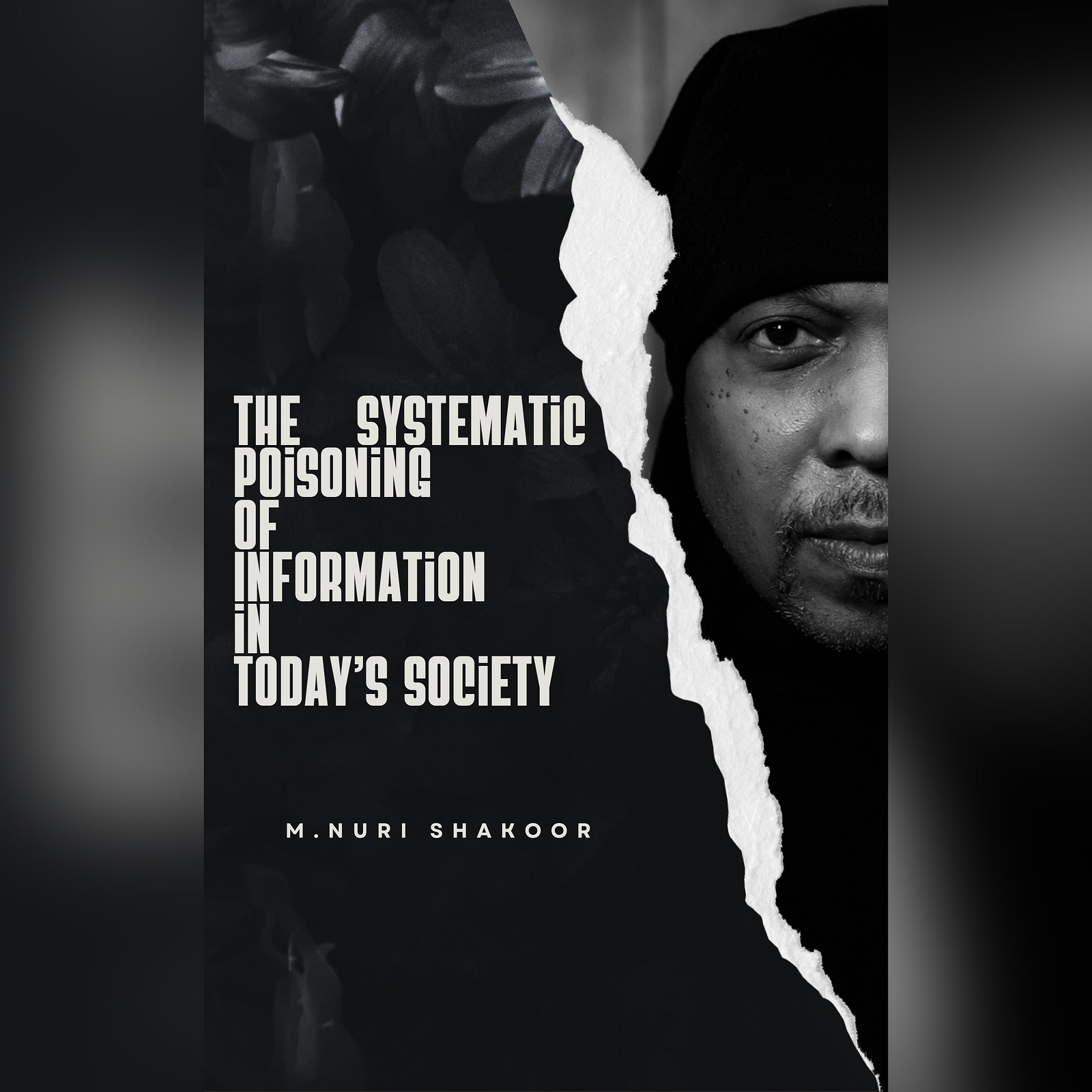
Welcome to the era of information — a time when truth should theoretically be at our fingertips, but instead, it feels more like swimming through a sea of toxic sludge. We are not merely drowning in data, but in deliberately distorted and weaponized information. The systematic poisoning of information in today’s society is not just an unfortunate side effect of the digital age; it’s a deliberate, calculated phenomenon designed to manipulate public perception. In this landscape, it’s hard not to wonder: Are we stumbling headfirst into an “Idiocracy,” where critical thinking has become an endangered species, and truth is whatever has the loudest microphone?
Deconstructing Truth: An Art Form for the 21st Century
Truth is having a bit of a midlife crisis. It’s not simply ignored or stretched thin — it’s being actively deconstructed, disassembled like an Ikea bookshelf put together by a blindfolded child. State-sponsored malign influence campaigns are at the forefront of this movement, and they’re not even trying to hide it. Whether it’s foreign governments sowing discord through carefully crafted disinformation or domestic actors warping facts to serve their political ends, we are bombarded with narratives built not on reality, but on emotive manipulation.
Take the notorious foreign disinformation campaigns, for instance. These operations don’t just lie outright; they strategically muddy the waters. You might have a kernel of truth wrapped in layers of misleading information until the average person can no longer tell fact from fiction. This is no accident. By bombarding the public with half-truths, twisted facts, and emotionally charged narratives, the architects of these campaigns aim to erode trust in any objective reality. The goal isn’t necessarily to convince you of a specific lie — it’s to make you doubt everything. Once you doubt everything, truth is whatever suits your biases.
This tactic isn’t just confined to shadowy operatives abroad. Closer to home, political actors manipulate information with the same ruthless efficiency, turning every event into a battleground of narratives. Political spin is now a grotesque art form where facts are surgically altered, dressed up, and paraded around as truth. And what about the rest of us? We’re left watching the spectacle, trying to figure out if there’s any actual news or actionable information hidden in the circus.
The Media: Partners in Crime?
If disinformation campaigns are the arsonists, major media platforms are the ones handing out gasoline and matches. In the quest for clicks and engagement, truth has become a casualty. News outlets, particularly those with overt political leanings, have mastered the art of sensationalism. It’s not enough to inform the public anymore — you’ve got to provoke, inflame, and, above all, get that retweet count soaring.
Take a look at any news cycle and it’s clear: the line between journalism and clickbait has blurred beyond recognition. The formula is simple: take a fact, strip it of nuance, wrap it in an emotional appeal, and watch the engagement metrics soar. Are you left more informed? Probably not. But are you feeling something? Absolutely — and that’s what counts in the modern media landscape.
Social media platforms have only amplified this problem. Algorithms don’t care about truth, they care about engagement. And what drives engagement? Rage. Anger. Fear. The more divisive the content, the more it gets pushed into your feed. As a result, we live in echo chambers where the most extreme and sensationalized versions of events become our reality. It’s no wonder critical thinking is on life support — who has the time to dig for truth when you’re constantly bombarded by emotionally charged headlines telling you what to think and how to feel?
Are We Heading Toward “Idiocracy”?
With every step we take down this path of information pollution, we edge closer to the world portrayed in Idiocracy — a society where intellect and critical thinking are laughed off as elitist, and the loudest voice wins by sheer decibel. We are witnessing the degradation of public discourse, where facts no longer matter as much as feelings, and intellectual debate is overshadowed by who can scream their version of reality the loudest.
Critical thinking, once the bedrock of democracy, is being replaced by emotional knee-jerk reactions. Why analyze a complex issue when a meme can tell you how to feel about it in five seconds? Why engage with a nuanced argument when you can dismiss it with a clever (if completely baseless) one-liner? We’ve traded depth for speed, substance for spectacle. And the consequences are starting to show.
When society is no longer able to distinguish truth from fiction, the very foundations of democracy begin to crumble. How can we make informed decisions about our leaders, our laws, or our future when we are constantly misled? We are sliding into a world where facts are flexible, and opinions — no matter how ill-informed — carry the same weight as expertise. That is the true danger of this systematic poisoning of information.
Restoring Truth: Is There Hope?
So, where do we go from here? Are we doomed to a future where truth is nothing more than a quaint relic of the past? Not necessarily. But the antidote to this poison is not going to come from above. Media platforms and political actors have little incentive to change a system that rewards sensationalism. The responsibility to reclaim truth lies with us, the consumers of information. We must demand better. We must engage critically, question narratives, and refuse to let our emotions be the sole arbiter of reality.
Institutions also have a role to play in restoring integrity to public discourse. Fact-checking organizations, independent journalism, and even education systems need to be reimagined to combat the tidal wave of disinformation. The fight for truth will not be easy — it’s a long, uphill battle. But the alternative is far worse: a society where reality is nothing more than a commodity to be bought, sold, and manipulated.
The systematic poisoning of information in today’s society is a deliberate and calculated effort to distort reality and manipulate public perception. Whether through state-sponsored disinformation campaigns or the media’s relentless pursuit of engagement at the expense of truth, we are rapidly losing our grip on what is real. And the consequences? A world where critical thinking is devalued, and truth is whatever makes the loudest noise. If we are to avoid the dystopian fate of an “Idiocracy,” we must fight back — not just for the integrity of information, but for the future of society itself.
The truth may be under attack, but it’s not too late to defend it. The question is: will we?
~ M. Nuri Shakoor, SRMP-C Independent Researcher IOSI Global and founder of the nonprofit ARAC International Inc.


Comments
Post a Comment